Botanical Name: Semecarpus anacardium Linn.
Family: Anacardiaceae
Introduction:
This plant causes allergy for most of the people, even anaphylactic shock . but some people not allergic to it. They purifies the nut at time of medicine preparation.
Vagbhata quote Bhallãtaka as the best drug for non-bleeding piles. Several Rasãyana Yogas are prepared by Bhallãtaka
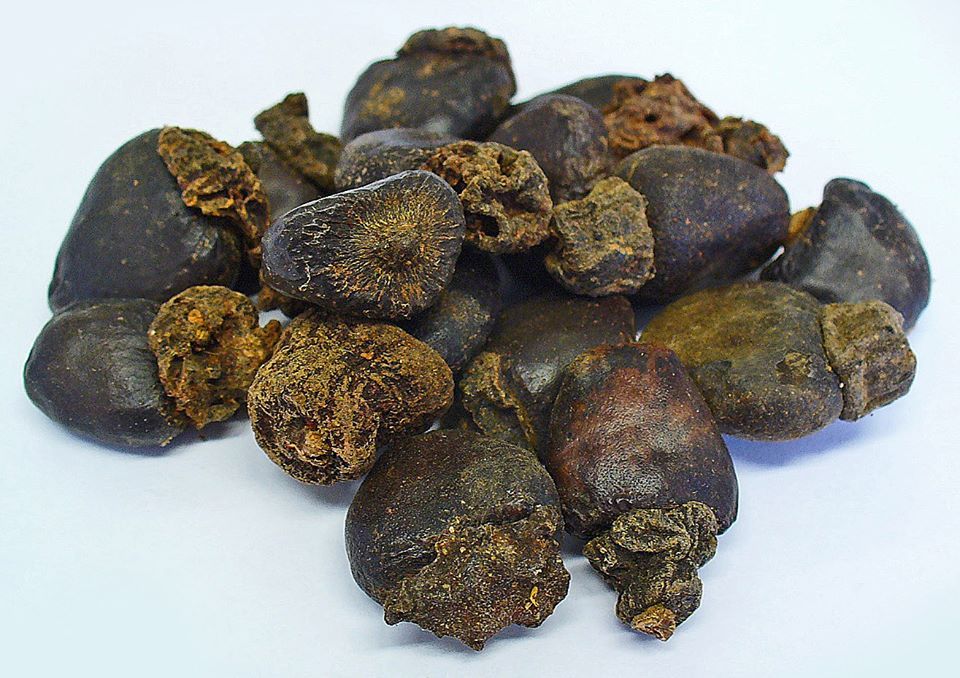
Names in different Indian languages
| English | Marking-Nut |
|---|---|
| Hindi | Bhilava, bhela |
| Kannada | Goddugeru, karigeri, bhallika |
| Malayalam | Cheru, alakkuceru |
| Sanskrit | Bhallatakah, aruskarh |
| Tamil | Senkottai, erimugi |
| Telugu | Bhallatamu , jidi |
| Unani | Balaadur, Bhilaayan, Bhilaavaan. |
| Folk | Bhilaavaa |
Synonyms
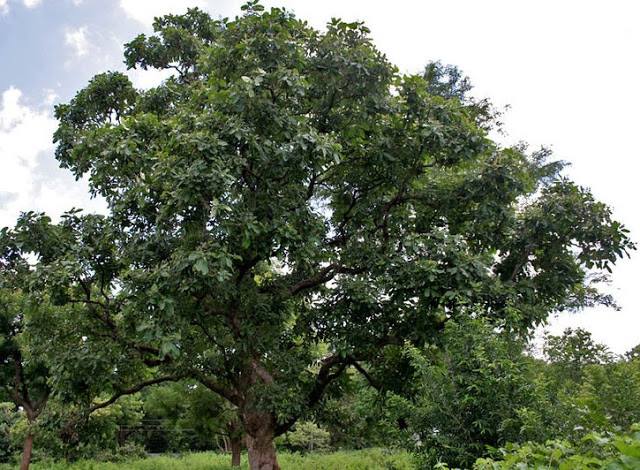
Bhallaataka, Bhallata, Arushkara, Agnik, Agnimukha, Sophkrit, Viravrksha.
Classification according to Charaka, Susrutha & Vagbhata
| Charaka | Dipaniya, Bbedaniya,Kusthaghna, Mutrasangrahana |
|---|---|
| Susrutha | Nyagrodhadi, Mustädi |
| Vagbhata | Nyagrodhadi, Mustädi |
Varieties & adulterants – (CV – controversy, AD – adulterants)
1. Nadi Bhallãtaka(Belongs to Ficus genus opinion by Thakurji)
2. Kajutaka or Vrtta Aruskara – Anacardium occidentale Linn. (Cashew Nut).
3. Nadi Bhallãtaka – Synonyms ( Vrsanka, Gojanaka – believes it shows Sita Virya )
4. Semecarpus travancorica Bedd., – AD
Morphology
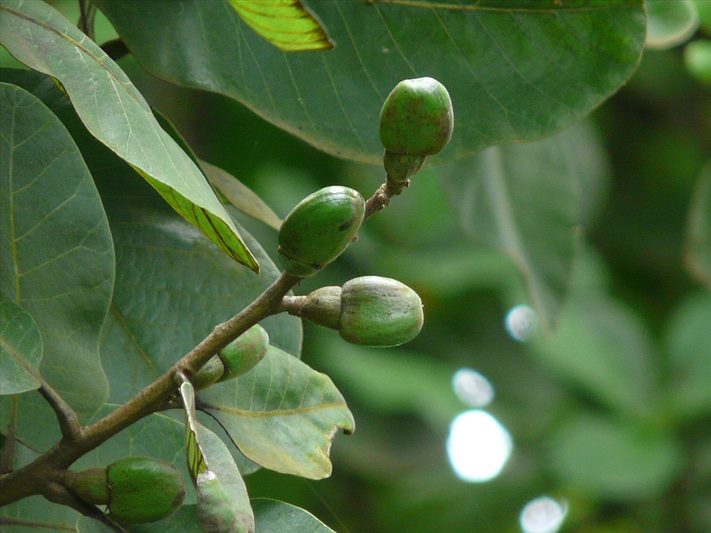
A moderate-sized, deciduous tree, 20- 25 m height. exudating a dark juice. Young branches, inflorescence, petioles and underside of leaves pubescent.
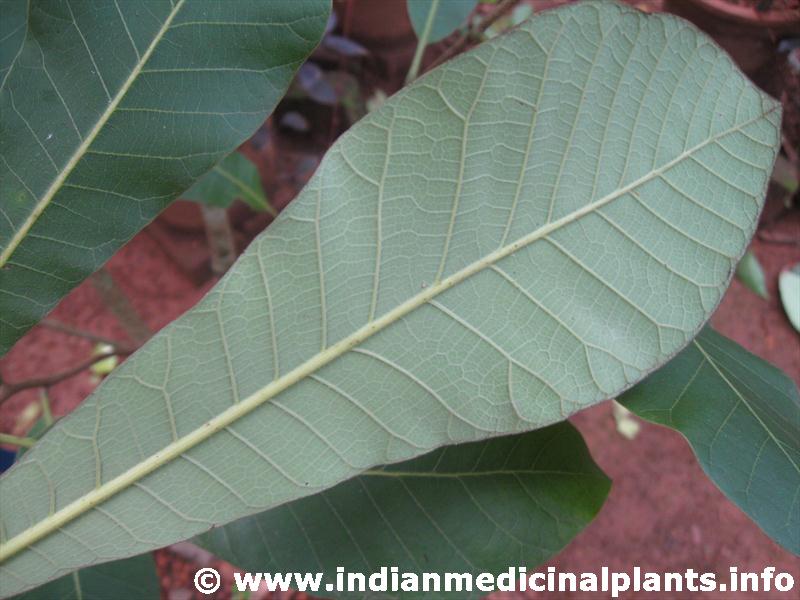
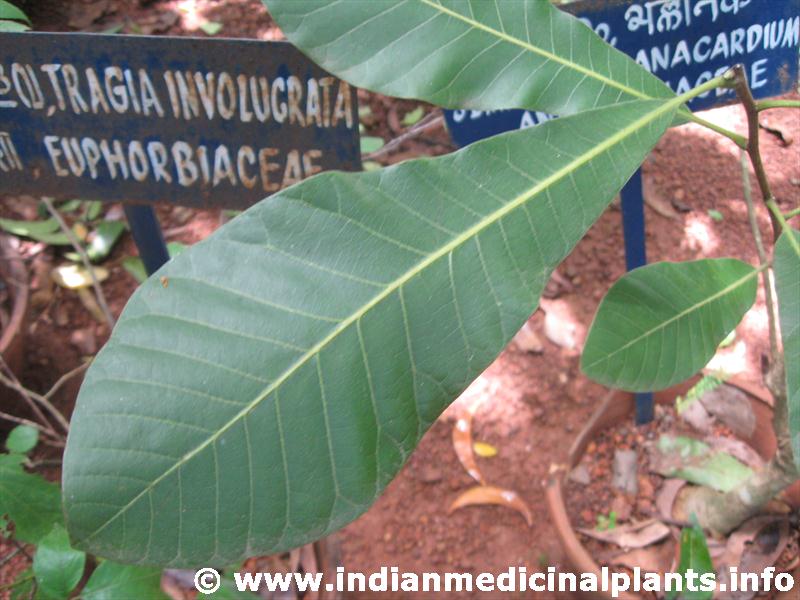
Leaves— Simple, alternate, oblong-obovate, rounded at apex, glabrous above.
Flowers- Greenish white, fasciculate, arranged in erect, compound, terminal panicles, greenish yellow coloured.
Fruits- drupes, about 2.5 cm long, obliquely oval or oblong, smooth, shining, purplish-black when ripe, cup orange-red. (Flowering round the year, mostly during May-June, Fruits ripen from November to February).
Distribution & Habitat
All over India
Chemical constituents:
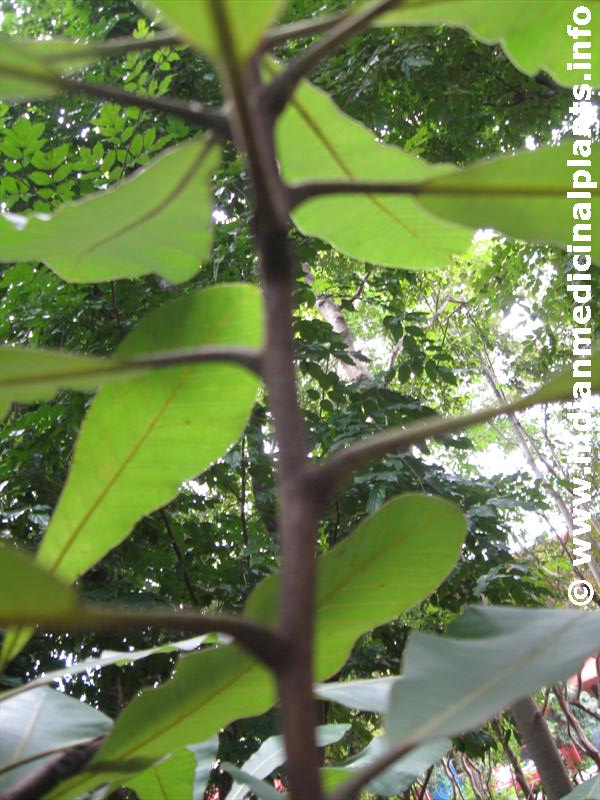
tetrahydrobustaflavone, tetrahydroamentoflavone, anacarduflavanone, nallaflavone, anacardic acid, aromatic amines , bhilawanol
Nuts— bioflavonoid A, B & C, tetrahydrobustaflavone, tetrahydromentoflavone, nallaflavone etc.
Nutshell—anacardic acid, bhilawanols, galluflavanone, jeediflavanone etc.
Kernel oil— linoleic, myristic, oleic, palmitic & stearic acids.
Fruits— Nicotinic acid, riboflavine, thiamine and essential amino acids.
Leaves— Amentoflavone
Properties:
Rasa : Katu, Tikta, Kasäya
Guna : Laghu, Tiksna, Snigdha
Virya : Usna
Vipaka : Madhura
Karma Kapha-vãtahara, Medhya, Vrsya, Dipana, Bhedana, kustaghna, krimighna
caustic, astringent, anti-inflammatory, antitumour, digestive, carminative, purgative, expectorant
Srotogamitva:
Dosh : Purisha (astringent), mutra (astringent), increases agni, diaphoretic : Alleviates vata, kapha and eliminates pitta.
Dhatu : Shukra (aphrodisiac), majja (beneficial to brain). rasa (vitiligo).
Mala : Organs : Liver, spleen.
Chief action : Cures haemorrhoids (useful for breaking the samprapti of haemorrhoids).
Indication:
vikãra, Arsas, Kustha, Krimi, Gulma, Grahani, Vãta vyädhi
haemorrhoids, rheumatoid arthritis, asthma, neuralgia, sciatica, hemiplegia, epilepsy.
Part used:
Seed kernel, bark
Dosage:
Powder 0.25-0.5 g
Decoction 50-100 ml
External uses : It induces blisters and is antidotal. In snake bite, incisions are taken on the snake bite region and juice of bhallataka is applied on it, Haemorrhoids become dry and fall off by an incense of bhallataka. (Dry haemorrhoids are caused by vata and kapha). If it is applied over vagina it causes abortion. It relieves pain.
Internal uses:
Nervous system : Useful in weakness of brain, epilepsy, sciatic neuralgia, rheumatoid arthritis and hemiplegia.
Digestive system : It is used in gastrointestinal disorders by its actions like appetizer, purgative, liver stimulant. Useful in loss of appetite, digestive disorders, constipation, abdominal distension, gulma, ascites, sprue, piles and various types of worms. It is the, best remedy for intestinal colic. 10-25 drops of this oil are mixed with sugar and given to the patient. Mainly useful in hookworm, It is an effective medicine for piles because it improves the blood circulation the liver and that reduces the pressure on the veins and it reduces blood accumulation (=piles) of rectal veins and thus dries the piles.
Circulatory system : Useful in cardiac debility because it is a cardiac stimulant, white cell enhancer and alleviates swelling.
Respiratory system Expectorant. Useful in cough and asthma. flowers in milk should be given for asthma. In cough caused by relaxation of the ulva and palate
Urinary system it stimulates kidneys and increases urination but then the functional capacity of the kidneys reduced and this decreases urination. If this process continues, it causes haematuria. It is used in urinary disorders
Reproductive system It promotes virility stimulates penile nerves, hence it is an aphrodisiac. It stimulates uterus ,used in seminal weakness, impotency and dysmenorrhoea.
Skin : It is excreted through the skin. It is a diaphoretic,. Its oral administration causes pruritus and erythema on the mucous membrane. Bhallataka is, the best medicine for dermatitis, vitiligo, vatarakia. Shevate + milk is useful on joint inflammation. A needle is inserted in a resin of bhallataka and ‘a heated over a wick dipped in ghee. This causes oozing of oil from the fruit with a crackling sound. Allow this oil to drop in milk, sugar or rice. These oil drops are known as shevate of bhallataka.
Temperature Diaphoretic and febrifuge. useful in chronic lever. It alleviates spleen and liver enlargement, loss of appetite
Satmikaran: It improves agni of each dhatu and also acts as a tonic and rejuvenator. Useful in general debility. The tablet made by bhallataka & haritaki, black cumin seeds
Important Yogas or Formations:
Amrita bhallataka, BhallatakaTaila, Bhallataka Khseerapak, Bhallataka Vardhaman prayoga, Bhallataka Kshar. Kalyanaka Kshara, cincabhallataki, Tailm.
Method of purification :
1. Bhallataka are to be preserved in brick powder for 8-12 days for purification purpose.
2.Take out the bhallataka fruit along with the stalk and keep it in the powder of bricks for a period of one week. Clean and wash thorough by rubbing it, then boil it with milk. This purifies bhallataka; impure bhallataka acts as a toxin, hence ‘it should not be used without purifying.
Restrictions : While taking bhallataka avoid drugs and activities which vitiate pitta. They should avoid hot, pungent. sour and salty food items.
Adverse effects to bhallataka : Impure or pure bhallataka if taken in excess dose, causes purities and burning sensation of anus and tip of the penis, excessive perspiration, thirst and reduced red or dusky urination.
In such conditions. one should stop taking bhallataka and should start pitta alleviating drugs like doorvadigana, sarivadigana. In conditions like burning sensation and swelling of skin. sesames oil, coconut oil. ghee or resin ointment should be applied locally. In 3-4 days the above symptoms subside
Therapeutic Uses:
(1) Kustha & Arsas— Bhallãtaka is given along with Tila
(2) Urustambha—Bhallãtaka, Pippali & Pippalimüla are made into paste and administered with honey .
Descriptions on Ayurveda books / Nighandu:
1
2
3
4
5
6
7
8
9
10
11
12