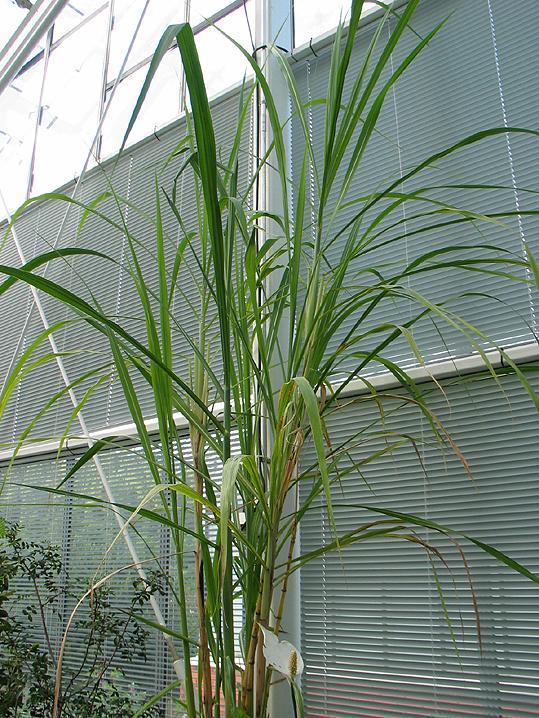
Botanical Name: Saccharum spontaneum Linn.
Family: Gramineae; Poaceae
Introduction:
Latin name : Saccharum = from arabic name souker
– sugar; sopnthneum = growing wild, sponta = of one’sown accord – no need of cultivation.
Names in different Indian languages
| English | Thatch Grass |
|---|---|
| Hindi | Kas, kus |
| Kannada | kusa |
| Malayalam | Kusa, naghana |
| Sanskrit | Kaasha |
| Tamil | Pekkarimpu |
| Telugu | Kaki ceruku, kaki gaddi |
| Unani | |
| Folk |
Synonyms
Kaasha, Kandekshu, Shvetachaamara
Classification according to Charaka, Susrutha & Vagbhata
| Charaka | |
|---|---|
| Susrutha | |
| Vagbhata |
Varieties & adulterants – (CV – controversy, AD – adulterants)
Morphology
A shrub growing in moist and shallow area is 12.5 to 15 cms. high. Stalk -strong.
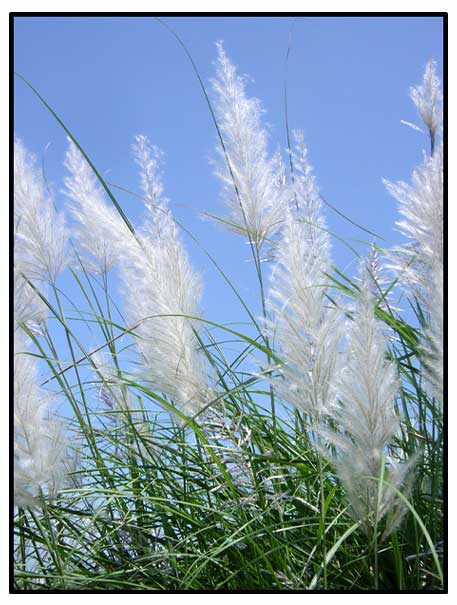
Leaves – thin and with folded margins. Stalk of flower – 2.5 to 5 cms. long and having white coloured flowers in bunches.
Flowers occur in autumn and fruits in winter.
Distribution & Habitat
Throughout India
Chemical constituents:
alanine, gammaamino butyric acid
Properties:
Guna : laghu. snigdha;
Rasa : madhur, tikta:
Vipaka : madhur;
Virya : sheeta;
Karma –
Lekhanam, tarpanam, balyam, vrishyam
cooling, astringent, diuretic, galactagogue
Srotogamitva:
Dosha : Vataghna. pittaghna.
Dhatu: Rakta (bleeding disorders, diarrhoea with bleeding per rectum, haemorrhoids, menorrhagia). rasa (galactogogue), reduces fats.
Mala : Diuretic (dissolves calculi).
Indication:
Mutrakrichra, swasa, kasa, atisara
burning sensation, dysuria, dyscrasia, kidney , bladder stones, dysentery, bleeding piles
Part used:
Root
Dosage:
Decoction 50-100 ml
Uses: It acts on rakta dhatu vitiated by vata and pitta. It is useful in bleeding disorders, in digestion due to pitta. diarrhoea with bleeding per rectum, bleeding piles, rnenorrhagia, burning sensation and phthisis. Because of its diuretic and lithotripsic properties, it is used in dysuria and calculi It is also used as a galactogogue.
Important Yogas or Formations:
Trinapanchmool kwath. Kushauleha. Kushadya ghrit