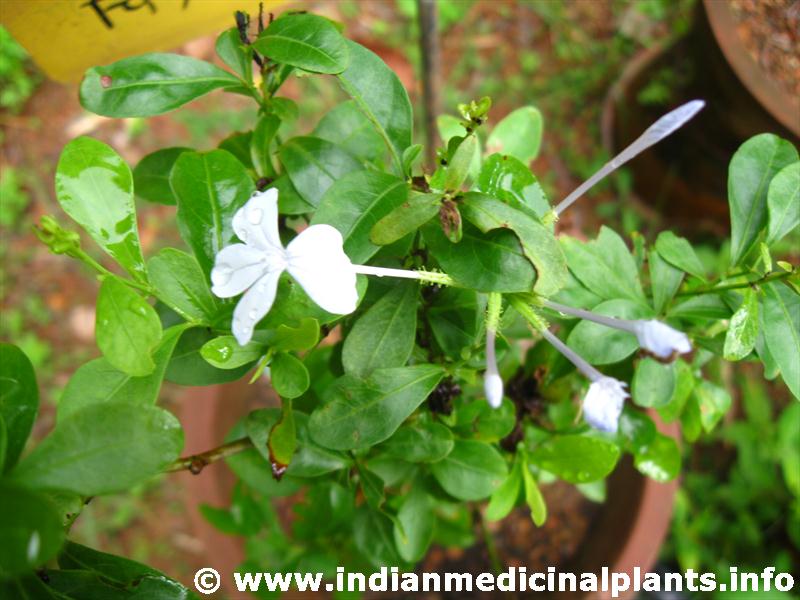
Botanical Name: Plumbago capensis Thunb.
Family: Plumbaginaceae
Introduction:
Even though its properties are similar to Plumbago zeylanica, it is not to much used in medicinal purpose. It is using as gardening plant. It is native to south America, not to much seen in India. There is a myth behind this plant, this will bring good fortune. This plant very common in South America.
Names in different Indian languages
| English | Cape plumbago, cape leadwort |
|---|---|
| Hindi | |
| Kannada | |
| Malayalam | Neela koduveli |
| Sanskrit | Chitraka, asita |
| Tamil | |
| Telugu | |
| Unani | |
| Folk |
Synonyms
Plumbago auriculata Lam.
Classification according to Charaka, Susrutha & Vagbhata
| Charaka | |
|---|---|
| Susrutha | |
| Vagbhata |
Varieties & adulterants – (CV – controversy, AD – adulterants)
Morphology
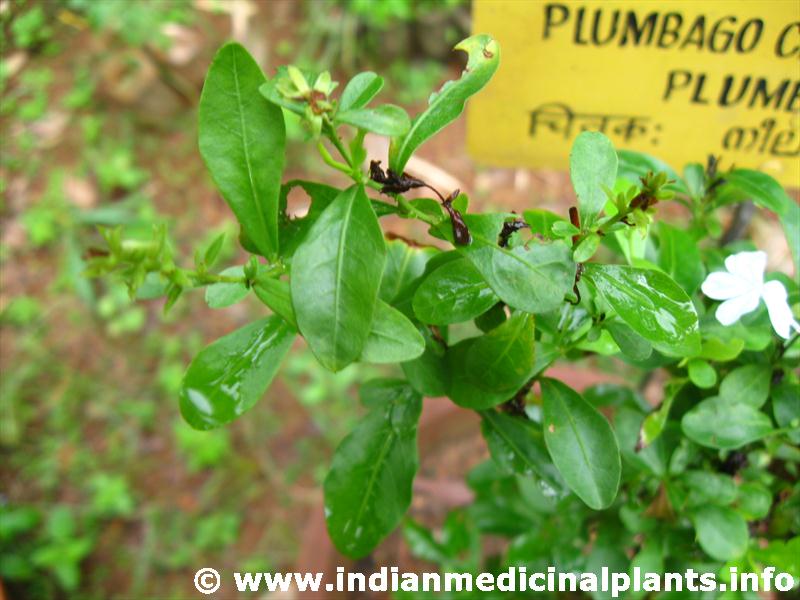
A perennial herb with 0.5-1.5 m long stems, some what woody, spreading, glabrous.
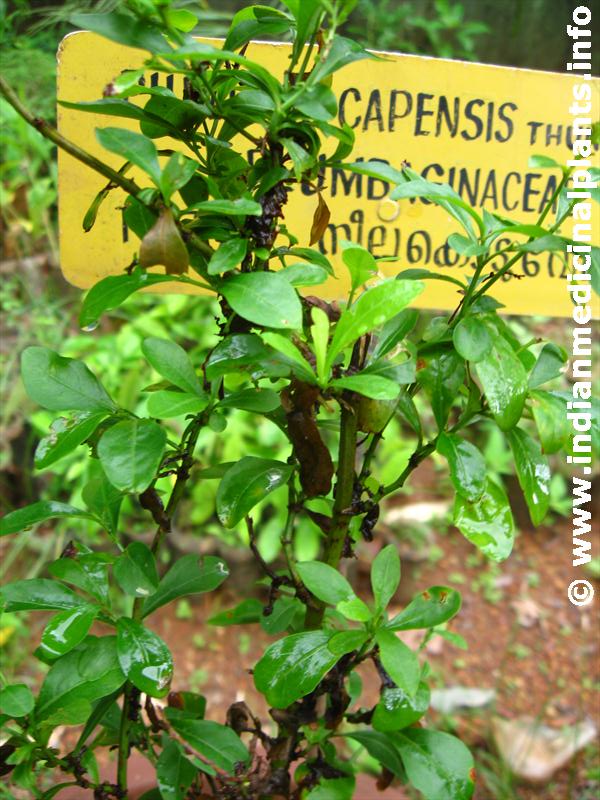
Leaves- simple, alternate, ovate, small, petiole short, amplexicaul at the base.
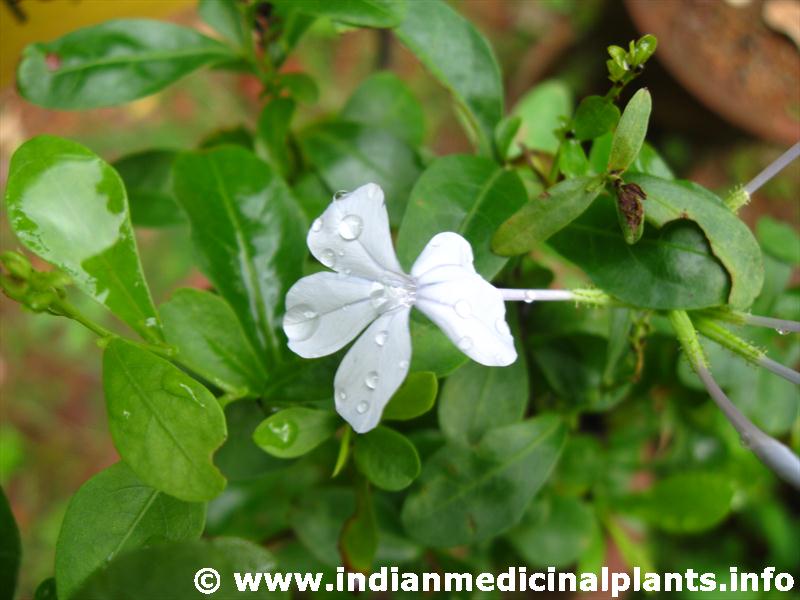
Flowers- pale blue, in elongate spikes; rachis glandular, striate
Fruit- Capsule, oblong, pointed; pericarp thin below, thick and hardened above.
Distribution & Habitat
Garden plant
Properties:
Its properties are similar to Plumbago zeylanica,