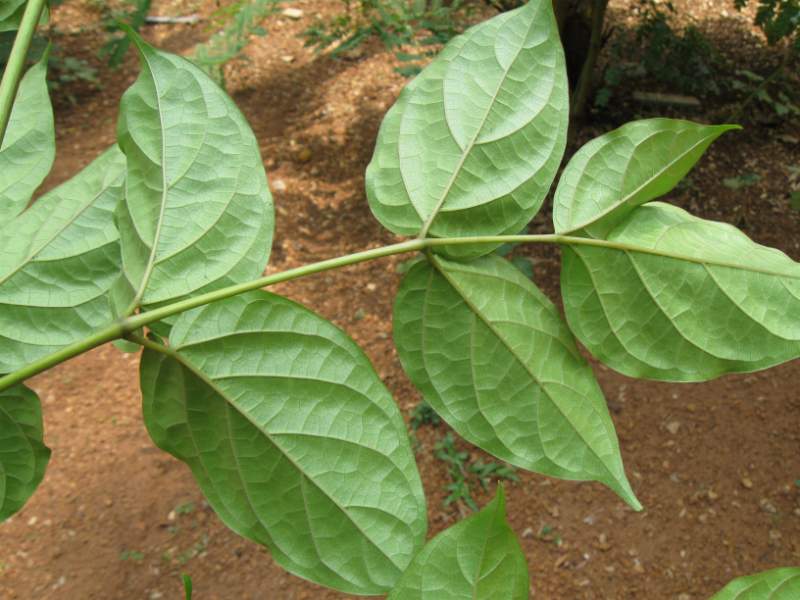
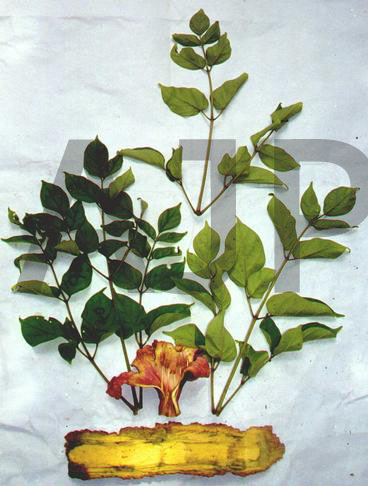
Botanical Name: Oroxylum indicum Vent.
Family: Bignoniaceae
Introduction:
It is one of the important trees included under Dasamula group.
Names in different Indian languages
| Hindi | Sonapatha, syona, arlu, pharkhat |
|---|---|
| Telugu | Dundilum, pampana |
| Tamil | palaiyudaycci |
| English | Indian trumpet tree |
| Marathi | Tentu |
| Gujarat | Tentu |
| Bengali | Sona |
| Kanada | tattuna |
| Malayalam | Palakappyani, payyalanta |
| Sanskrit | Syonakah, tuntukah |
Synonyms
Shoshana, Tuntuka, Kutannata,Madhukparna, Patrorna, Bhalluka, Prthushimba, Nata
Classification according to Charaka, Susrutha & Vagbhata
| Charaka | sothahara, Sitaprasamana, Anuvãsanopaga |
|---|---|
| Susrutha | Rodhrãdi, Viratarvãdi, Brhat pancamula |
| Vagbhata | Rodhrãdi, Viratarvãdi |
Varieties & adulterants – (CV – controversy, AD – adulterants)
1. Calosanthes indica [AD]
Morphology
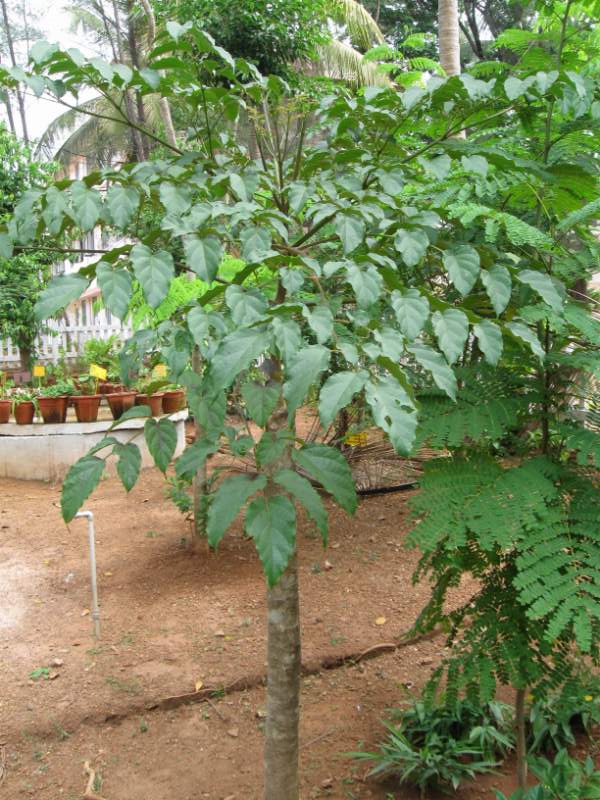
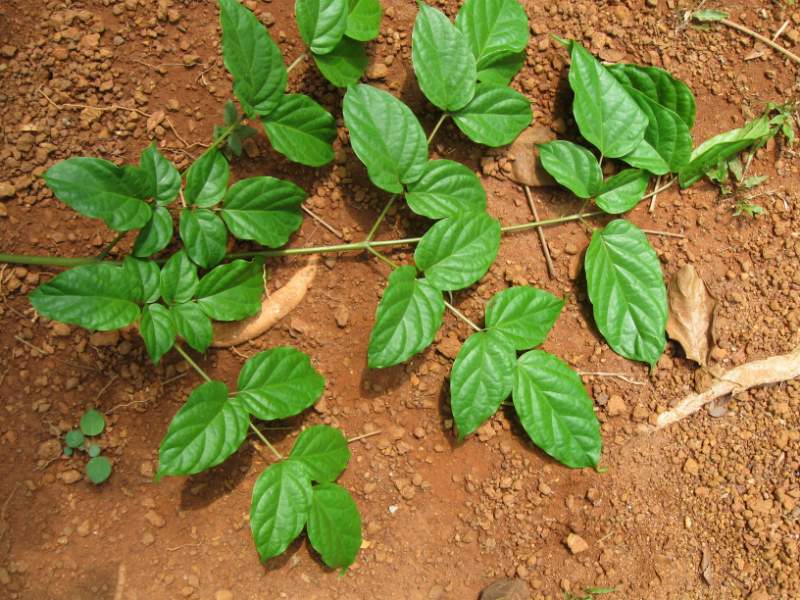
A tree about 8-15 m high.
Leaves— Opposite, very large 90 -180 cm, ternately bipinnate; leaflets ovate entire acuminate peduncle, rachis very soft.swollen at the junction of joints.
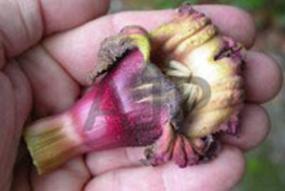
Flowers— in racemes (25 cm long: approx), foetid; fleshy, reddish purple outside, pale yellow within.
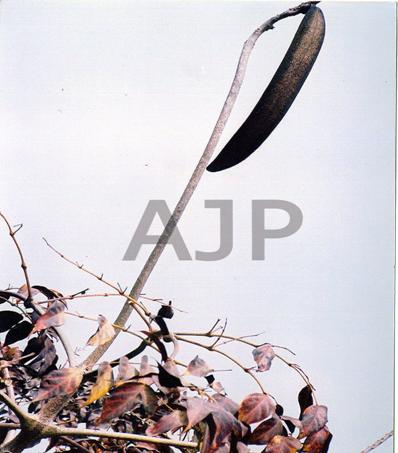
Fruits— Flat capsule, large- linear compressed capsules, septicidally bivalved.
Seeds— discoid thin, wing hyaline and broad.
Flowers and fruits during July-November.
Distribution & Habitat
Found in the warmer parts of India (upto 1200 m.). Also cultivated, as an avenue tree.
Chemical composition : Its root bark contains oroxylin. Besides this, one bitter principle, pectin, fats, wax, chlorophyl, astringent principle, citric add. Baicalein, Tetulin, oroxindin, aloe-emodin, Chrysin, 6- methylether of baicalein oroxylium A; p-coumaric acid,.scutellarein-7-rutinoside, prunetin, -sitosterol etc.
Properties—
Rasa Madhura, Tikta, Kasaya
Guna Laghu, Ruksa
Virya Usna
Vipãka Katu
Karma – Kapha-vatahara, Dipana, Grãhi
Digestive, constipative, diuretic, carminative, stomachic, spasmolytic, astringent, antidiarrhoeal
Part Used— Root bark.
Dosage— Powder 3-6 g, decoction 50-100 ml
Indications— Amavãta, Atisãra, Aruci, Kãsa, Basti vikãra, Vataroga, sotha,
dropsy, cough, asthma, anorexia, flatulence, gout, vomiting, rheumatoid arthritis, fever, dysentery.
Important Yogas or Formations
Shyonak putpak, Brihatpanchamooladi decoction (decoction of bark is not done). arista, Dasamuladi Kvãtha, syoñaka puapãka, syonãkadi yoga, Mulaka taila, syonaka taila, Himsrãdi yoga.
Important research work going on
(1) diuretic activity
(2) Spasmogamic action.
(3) action on ADH
Therapeutic Uses—
(1) Nasaroga— Dhuma with satapuspa, Tvak, Balãmüla, syonãka, Eranda, Bilva and Aragvadha mixed with ghee, vasã and bee-wax (A.H.Ut. 20).