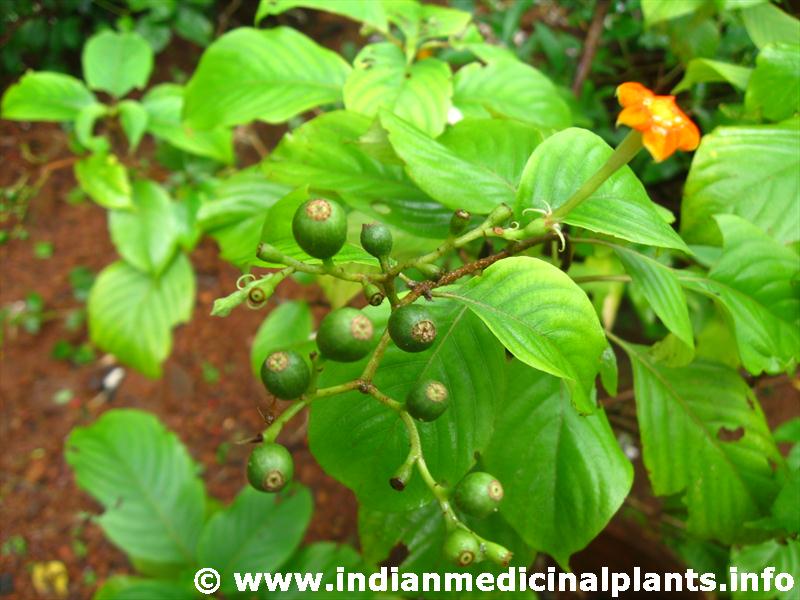
Botanical Name: Mussaenda frondosa Linn.
Family: Rubiaceae.
Introduction:
This is an endemic plant, used in folk medicine for skin disease and cough
Names in different Indian languages
| English | White Lady, White Rag Plant |
|---|---|
| Hindi | Bedina |
| Kannada | Bellotigida, belloti |
| Malayalam | Vellila, vellilam, vellilattali |
| Sanskrit | Sriparnah |
| Tamil | Vellai-yilai, Vellimadandai |
| Telugu | Nagavalli, sribati |
| Unani | |
| Folk | Shrivara, Bedina, Bebina, Bhutakesha |
Synonyms
Shrivati, rajatarih
Mussaenda var. glabrata Hook. f..
Mussaenda glabrata (Hook. f.) Hutch.
Mussaenda laxa (Hook. f.) Hutch.
Mussaenda belila Buch. Ham
Varieties & adulterants – (CV – controversy, AD – adulterants)
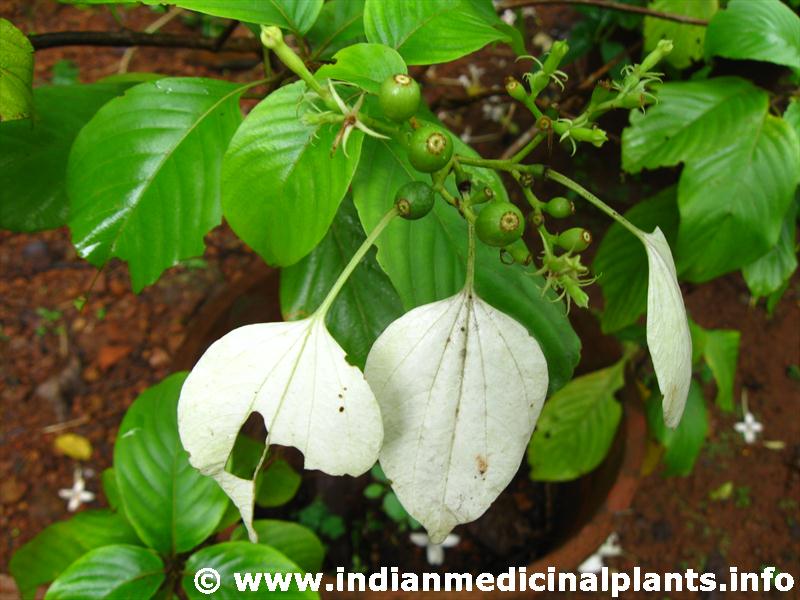
Morphology
Branched shrub grows in wild areas
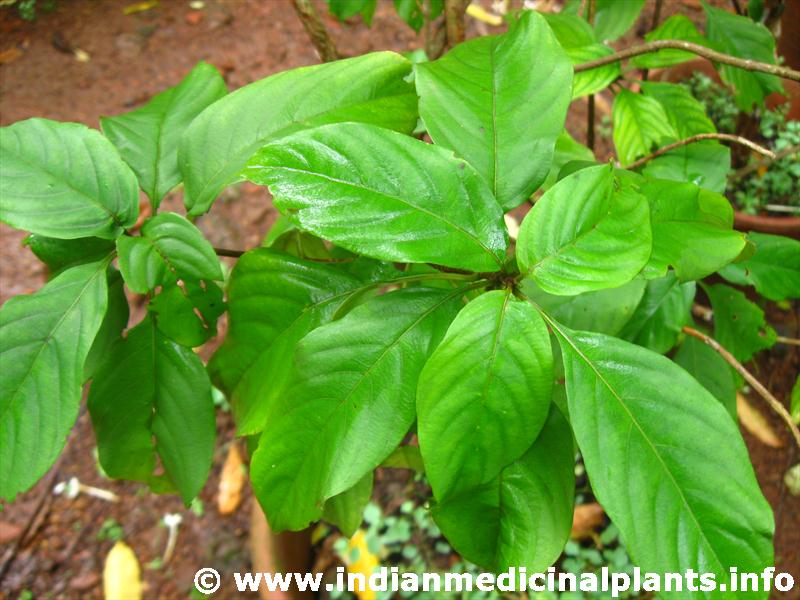
Leaves – simple, opposite, ovate,
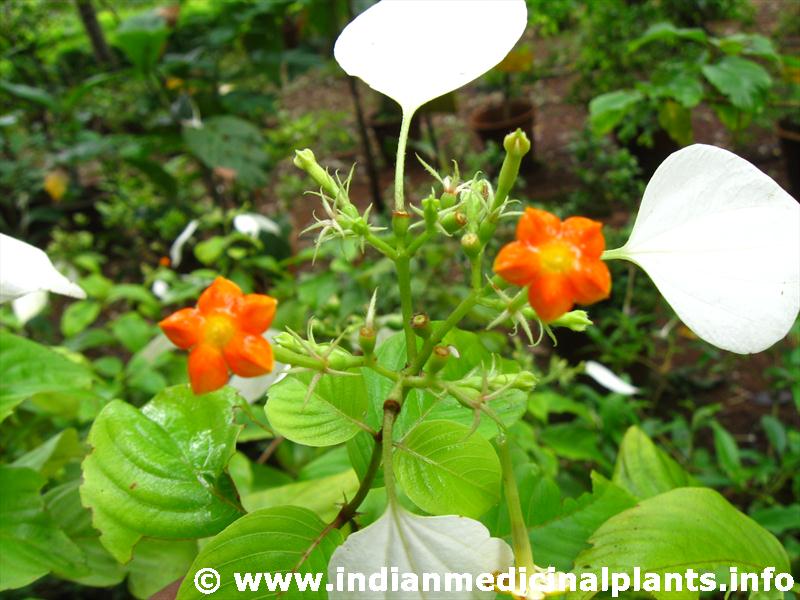
Flower – yellow – orange
Fruit – berry
Distribution & Habitat
South India
Chemical constituents:
anthocyanins, hyperin, quercetin, rutin, ferulic, sinapic acids, beta-sitosterol glucoside
Properties:
RASA-kashaya, madhur
GUNA-laghu
VIRYA-ushna
VIPAKA-katu
Karma –kamalaghna, kasaghna, kandughna
diuretic, antiasthmatic, antiperiodic, anti inflammatory
Indication:
Cough, fever, jaundice , leprosy , ulcers, leucoderma
Part used:
Root, leaf ,bark
Dosage:
Decoction 50-100 ml
Therapeutic Uses:
- Decoction useful in cleaning wounds
Descriptions on Ayurveda books / Nighandu:
1.