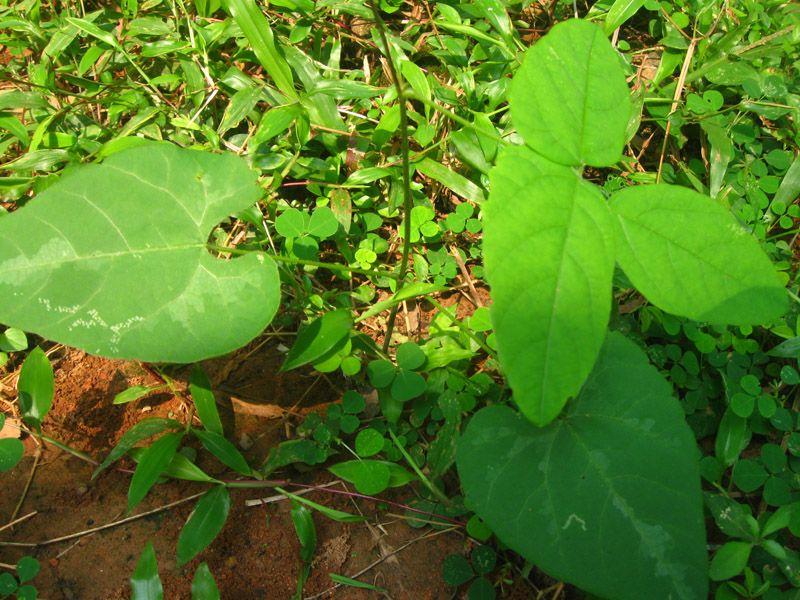
Botanical Name: Mucuna prurita Hook.
Family: Papilionaceae; Fabaceae
Introduction:
This drug effective in nervous system & reproductive system. Now a days this plant cultivated using chemical fertilizer, I don’t know that is very much effective. Also there is a problem exists, due to high price and lack of availability not only seed but also pod of the plant is powdered and using in preparation of medicine. This plant seed very much effective in delay of degenerative changes in brain cells.
Names in different Indian languages
| English | Cowhage, Horse-eye Bean |
|---|---|
| Hindi | Gonca, kaunc, kivacc |
| Kannada | Nasuganni, nayisonanguballi |
| Malayalam | Naykkorana, corivalli |
| Sanskrit | Aatmaguptaa |
| Tamil | Poonaikkaali |
| Telugu | Pillladugu |
| Unani | Konchh |
| Folk |
Synonyms
Kapikacchuu, Rshabhi, Adhigandhaa, Ajadaaa, Kacchuraa, Laanguli, Rshyaproktaa, Svaguptaa, Shyaamguptaa, Markati, Kanduraa, Kevaanch, Shuukashimbi.
Mucuna pruriens Baker non DC.
Classification according to Charaka, Susrutha & Vagbhata
| Charaka | Balya, Madhura skañdha |
|---|---|
| Susrutha | Vidarigañdhãdi, Vãtasamamana |
| Vagbhata | Vidaryadi, Dürvãdi gana |
Varieties & adulterants – (CV – controversy, AD – adulterants)
M. monosperma D.C.
Morphology
It is a herbaceous twinning annual.
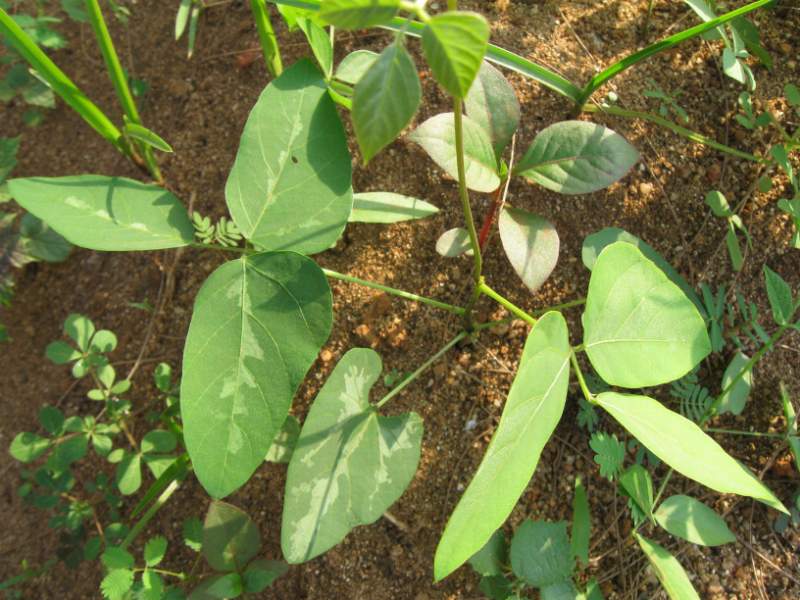
Leaves- trifoliate, grey silky below; leaflets elliptic, broadly ovate or rhomboid ovate, unequal at the base.
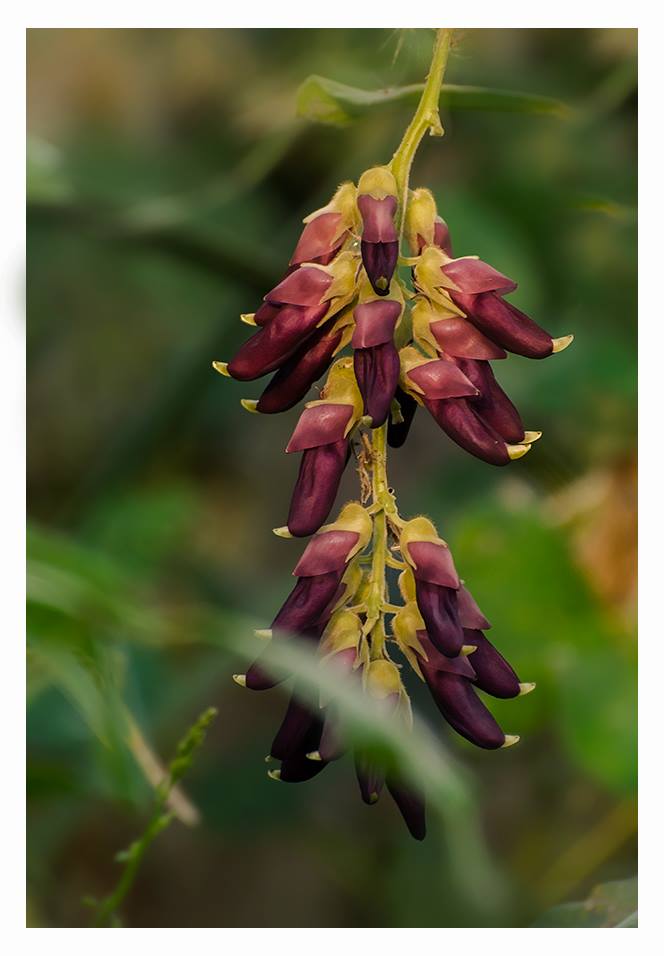
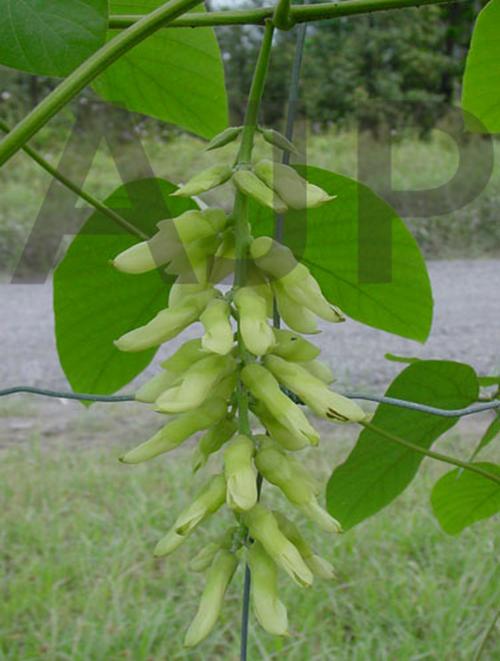
Flowers, in axillary, pendulous racemes, purple.
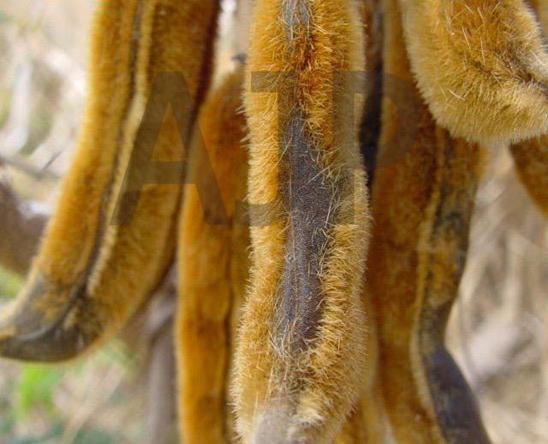
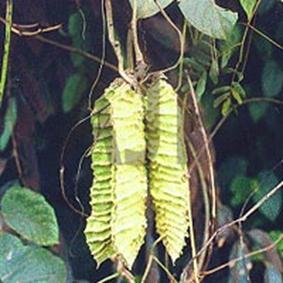
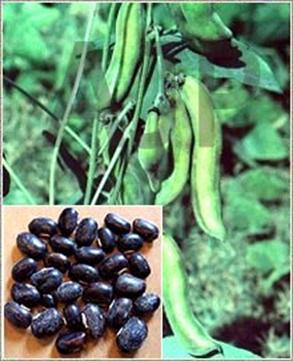
Fruits- pods, curved, turgid, longitudinally ribbed, 6-10 cm, densely clothed with gray or pale-brown bristles (causes intense itching and dermatitis).
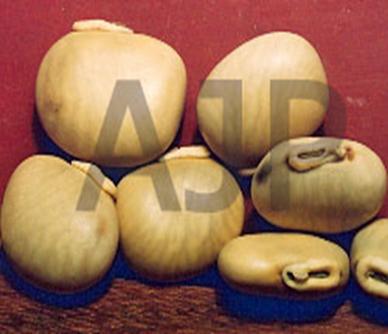
seeds 4-6—ovoid.
chemical constituents
Seeds– L-dopa, mucunine, mucunadine, prurienine, purienine,
tryptamine,
Seed oil– stearic, palmitic, myristic, arachidic, oleic, linoleic acids & sterol.Podtrichomes- 5- hydroxytryptamine
Whole plant– choline , enzyme- protease- mucunain. Several alkaloids have been isolated.
Properties-
Rasa –Madhura, Tikta
Guna: Guru, Snigdha
Virya: Usna, Sita (Dha.Ni.)
Vipãka: Madhura
Karma Vata-pittahara, Balya, Brmhana, Vãjikarana, rasayana
astringent, nervine tonic, local stimulant, used in impotence,purgative, diuretic, constipating
Indications — Mütra-krcchra. Vãtavyãdhi, Parkinsonism, Klaibya, Kastãrtava,
spermatorrhoea, urinary troubles, leucorrhoea, sterility, fever, delirium, general debility
Part Used— Seeds, root, pod-hair
Dosage— Seed powder 3-6g; root decoction 50– 100 ml; pod hair powder 125 mg.
Distribution & Habitat
All over India. More in the tropical regions.
Internal uses
Nervous system: The roots and seeds are tonic for the neurons- The root is useful in hemi paresis and facial palsy. The seed – powder is useful in Parkinson’s disease.
Digestive system : The legumes are anthelmintic for roundworm. Trichomes 0.3.- 0.5 gm. are given mixed with butter, jaggery or honey. Next day a laxative is given-The round worm are killed and expelled out.
Reproductive system : The seeds are very useful in oilgospermia and impotence. Seeds soaked in the root extract relieves vaginal laxity. The oil from seeds is useful in leucorrhoea.
Urinary System: The root has diuretic property, renal dysfunction.
Satmikaran : It promotes muscle mass and body weight shakrawardhak-improves the quality of semen. Hence it is very useful in impotence and oligospermia. The seeds have a high nutritional property.
Srotogamitwa :
Dosha :Tridoshasrotogami.
Dhatu : Shukra (aphrodisiac ), mamsa meda Brimhana), raktagami.
Mala: Purisha . Beeja : Vatashaman.
Dosha: Vatashaman.
Dhatu : Shukra (an aphrodisiac, promoting ejaculation).
Important Yogas or Formulations
Vanarigutika, Mashabaladipachana.
The seed powder 10- 15 g. three times in a day has been shown to be useful in Parkinson’s disease.
Important research work going on
(1) neuro-muscular blocking effects
(2) antispasmodic action
(3)anticholinesterase activity
(4) hypotensive activity
(5)hypoglycemic effect
(6) hypocholesterolemic effect
Therapeutic Uses—
(1) Vãtavyãdhi – Decoction. of the seeds of Kapikacchu for one month .Which improve the strength of arms (C.D.).
(2) Krimi – The pod hair powder (125mg) is given with jaggary, honey, or butter .
(3) Atisãra- Root paste is used in Pakva Raktãtisãra (S.S. Ut.40).
(4) Vãjikarana- Seeds are boiled in milk along with wheat and taken with ghee (S.S.Ci.26).
Descriptions on Ayurveda books / Nighandu:
1
2
3
4
5
6
7
8
9
10
11