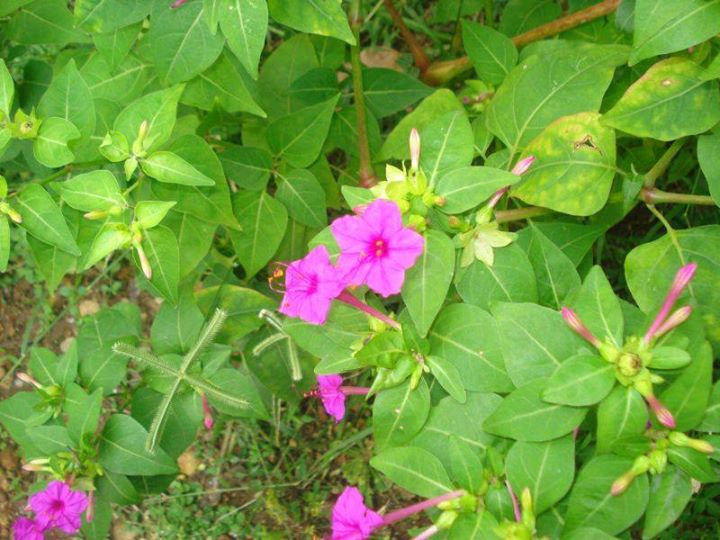
Botanical Name: Mirabilis jalapa Linn.
Family: Nyctaginaceae
Introduction:
Even though it is an ornamental plant, it is used in medicine in folk, unnani and siddha
Names in different Indian languages
| English | Four o’ clock plant, beauty of the night, marvel of peru |
|---|---|
| Hindi | |
| Kannada | |
| Malayalam | Nalu mani chedi, anthi malari, pathittadi |
| Sanskrit | Krishnakeli, gulambasa, Trisandhi |
| Tamil | Andhimalligai, pattarachi |
| Telugu | |
| Unani | Gul-abbaas |
| Folk |
Synonyms
Classification according to Charaka, Susrutha & Vagbhata
| Charaka | |
|---|---|
| Susrutha | |
| Vagbhata |
Varieties & adulterants – (CV – controversy, AD – adulterants)
It adulterers with Smilax china
Morphology
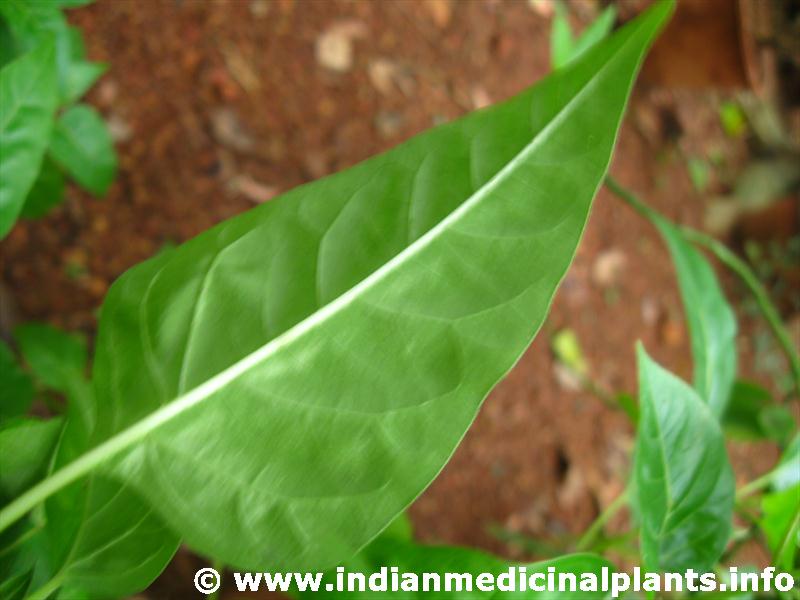
A perennial herb, grows up to 40-60 cm
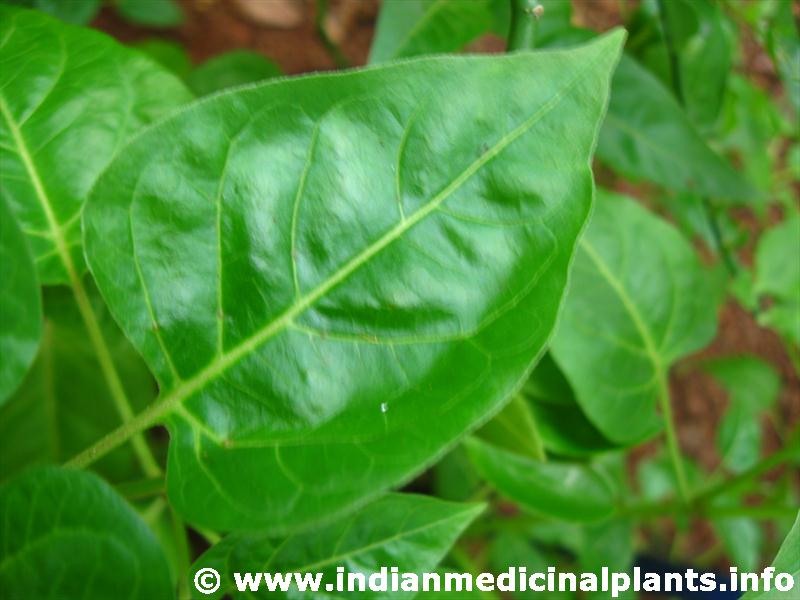
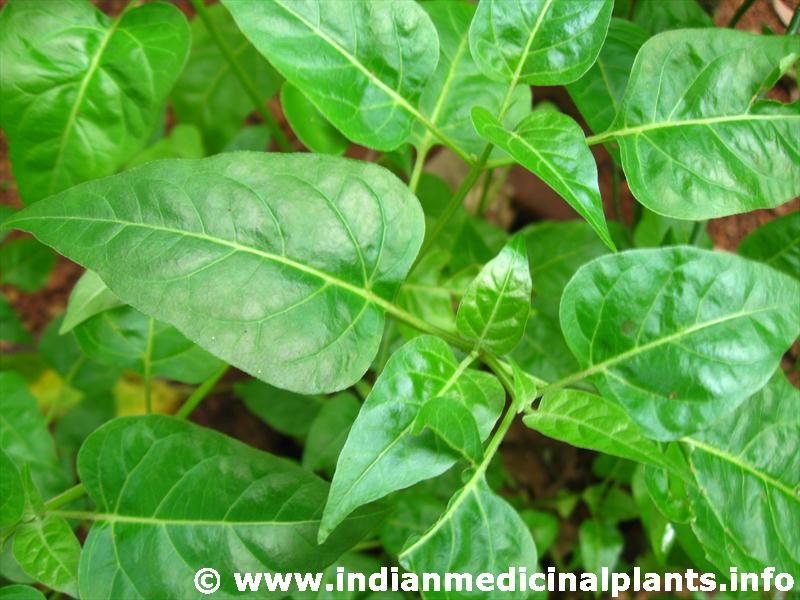
Leaves – simple, opposite, cordate-pointed, glabrous
Flower –yellow, white, red – various colours
Distribution & Habitat
All over India
Chemical constituents:
triterpenes, alpha-amyrin, Mirabilis Antiviral Protein , Miraxanthins I, II, III and IV, indicaxanthin and vulgaxanthin
Karma –
antifungal activity, purgative, spasmolytic, antitumour and virus-inhibitory activity
Indication:
uterine discharge, urticaria, skin disease , boils
Part used:
Whole plant
Dosage:
2-4 g
Therapeutic Uses:
- Whole plant decoction useful in washing wounds