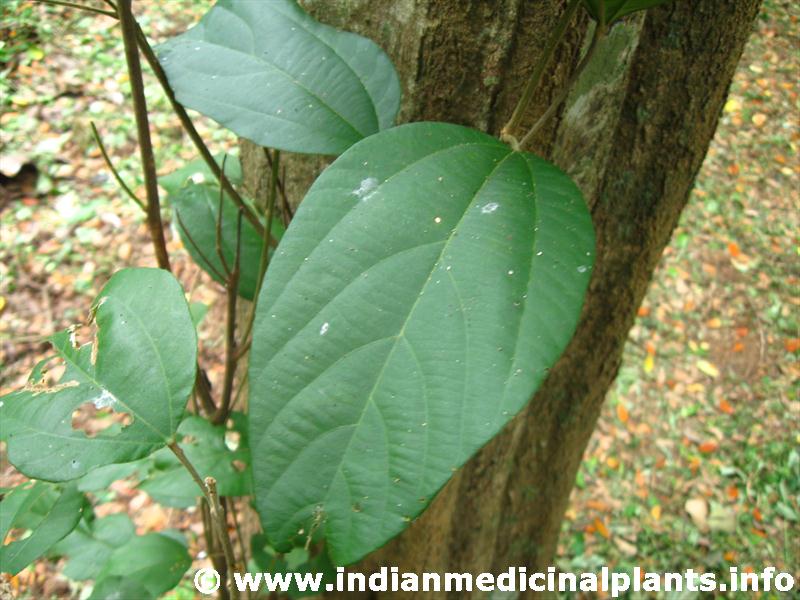
Botanical Name: Mallotus philippensis Muell.-Arg.
Family: Euphorbiaceae
Introduction:
Latin name: Mallotus like the shape of Melon; philippinensis in island Phillipines (Rottlera tinctoria- to dye silk).
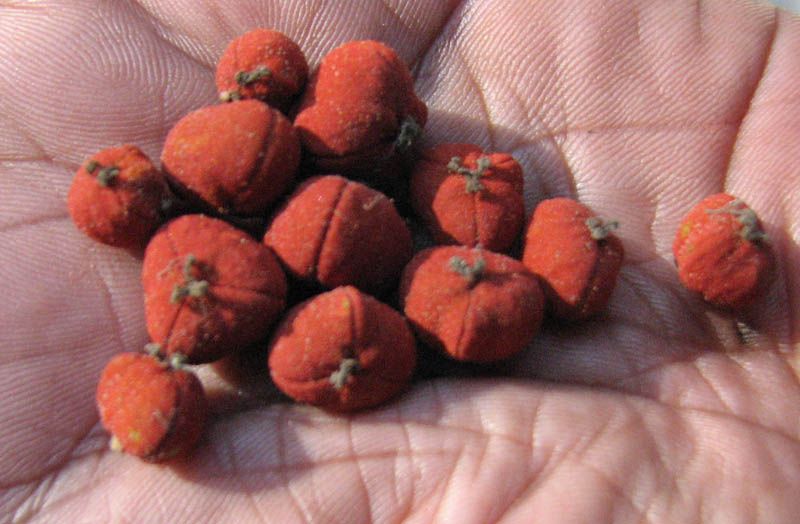
On the ripe fruit there is red powder which falls oft when fruits are rubbed. It is called as kapila. Seeds ‘circular and smooth. flowering occurs in autumn and (nuts in spring (Observation Pure kapita powder doesn’t get dissolved in water. It floats on the upper surface of water. It is inflammable like alcohol. It dissolves in ether and alkaloids. When kapila powder is smeared on paper with a wet finger, it turns the paper yellow. It is soft to touch, light and odourless. It is adulterated by brick powder.
Names in different Indian languages
| English | Kamala tree, Monkey Face tree |
|---|---|
| Hindi | Sindur, kamala |
| Kannada | Kampilaka |
| Malayalam | Sinduri, kampipala, manjana, kuramatakku |
| Sanskrit | Kampillaka, rechaka |
| Tamil | Kapli, Kalupatti, kumkum, manjanai, kamala |
| Telugu | Sundari, vasanta, kumkumamu |
| Unani | Kamilla, Kambilaa |
| Folk |
Synonyms
Kampillaka, Kampilla, Karkash, Raktaanga, Rechan, Chandra.
Classification according to Charaka, Susrutha & Vagbhata
| Charaka | |
|---|---|
| Susrutha | |
| Vagbhata |
Varieties & adulterants – (CV – controversy, AD – adulterants)
- Latex of Euphorbia tirucalli Linn. -CV
- Tabernaemontana heyneana Wall -CV
Morphology
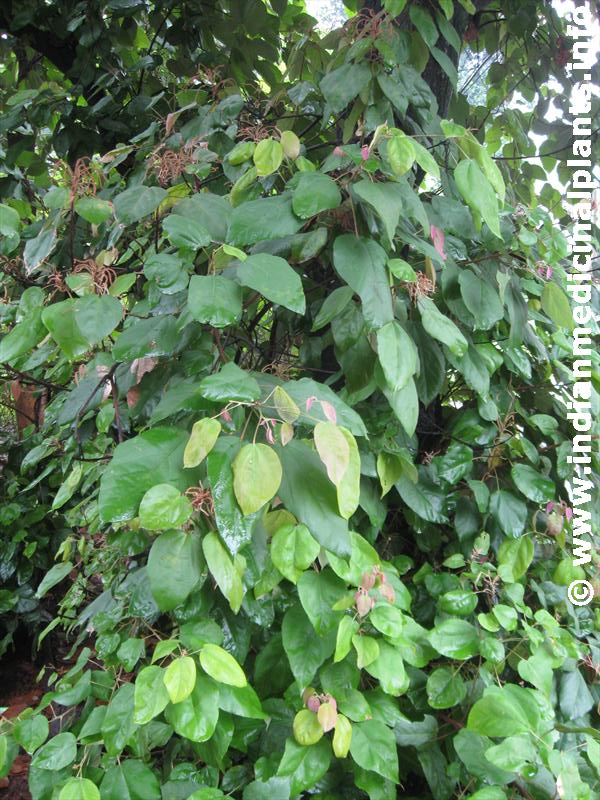
Evergreen tree 8 to 10 mtrs. high.
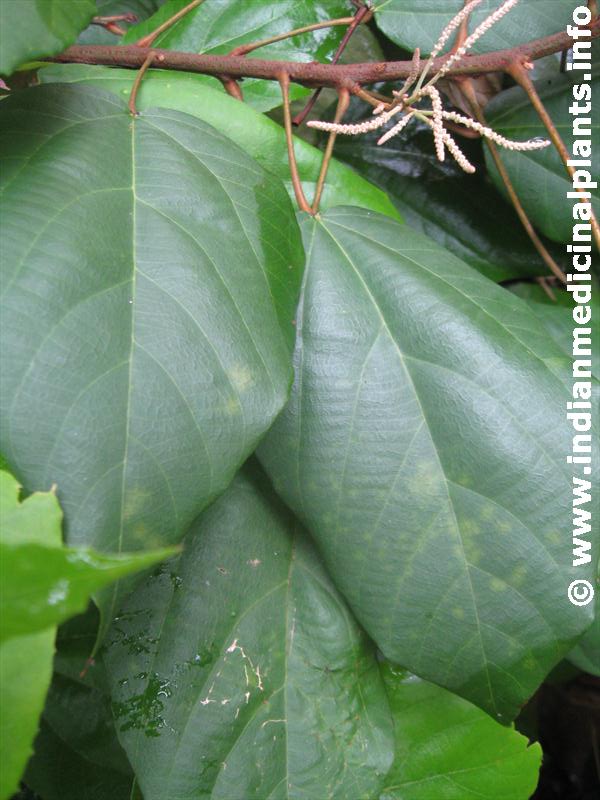
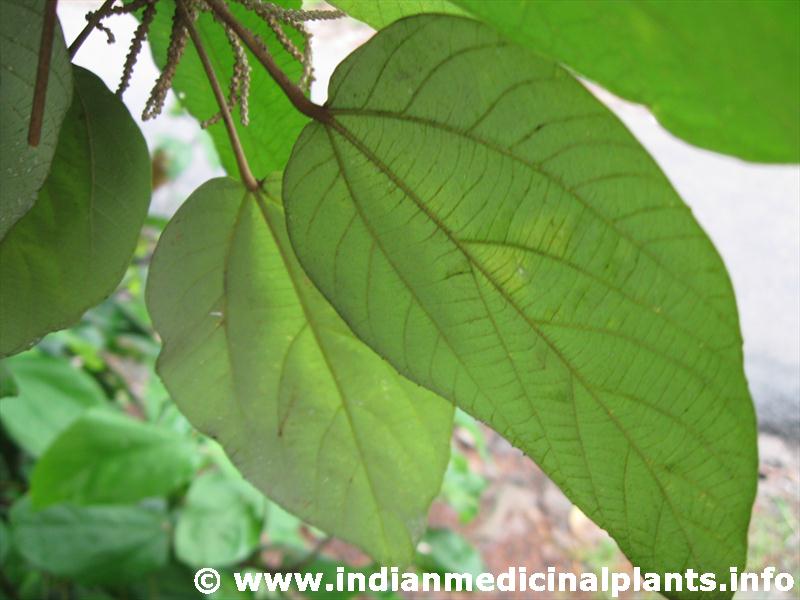
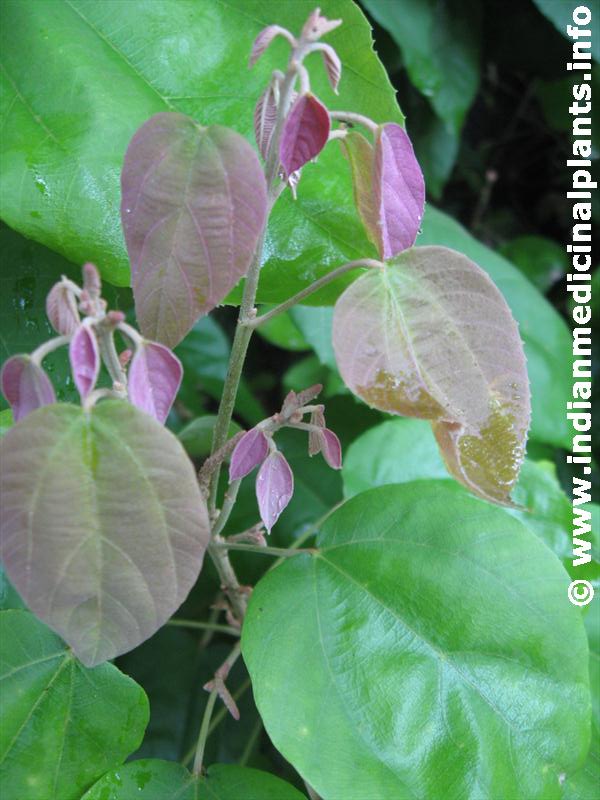
Leaves– simple, alternate, ovate-lanceolate, base of the leaf stalk. Ventrally it has 3 red veins
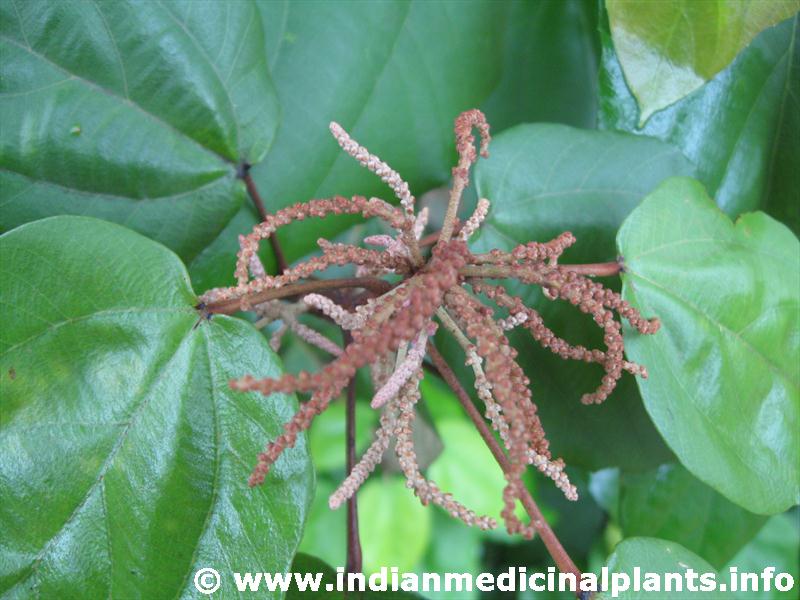
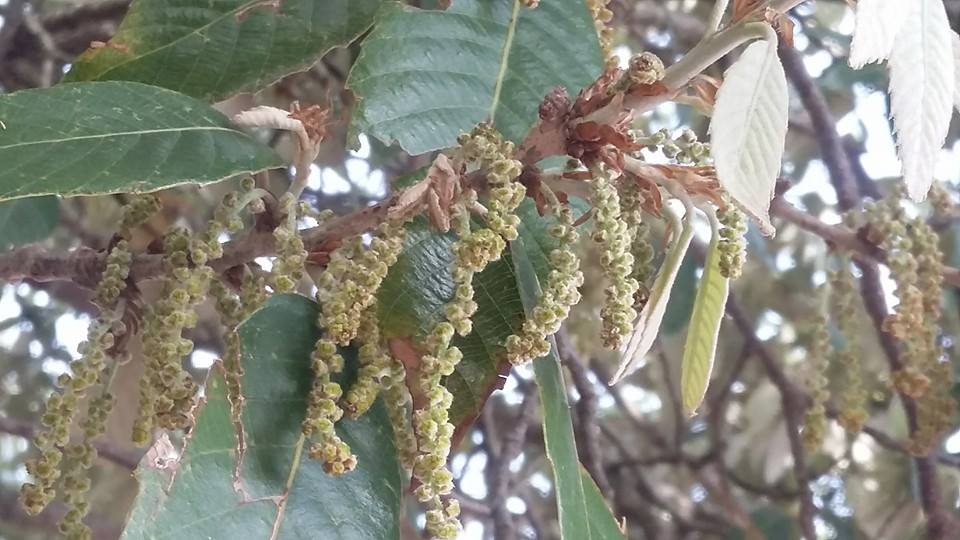
Flower- spike, dioecious , yellowish
Fruit – globose, small, having 3 compartments and appear in bunches.
Distribution & Habitat
All over India
Chemical constituents:
rottlerin, isorottlerin, iso-allorottlerin , methylene-bis-methylphloroacetophenone
Properties:
RASA-katu
GUNA-laghu, ruksha, tikshna
VIRYA-ushna
VIPAKA-katu
Karma –vrishyam, ranchaka, gulmahara, grahi, deepana
purgative, anthelmintic, styptic, digestive, depurative , hypoglycaemic,
spasmolytic, antibacterial
Srotogamitva:
Dosha : kaphavatashamak and pittavardhak. ( some other says it is Vatala)
Dhatu :raktha, shukra
Mala :purisha
Organ : liver
Indication:
Krimi, vrana, anaham, gulma
Tapeworm infestation; in scabies, ringworm, herpes.
Part used:
Glandular hair of fruits, bark
Dosage:
0.5 – 1 g – hair
External uses : Useful in dermatoses. cleans and heals the wound. It should be mixed with oil and honey and then applied to ulcerated and pyrogenic wounds.
Internal uses:
It is used in flatulence. ascites, constipation, worms. It kills and expels the worms. There is tradition of using mild laxative along with it. It is very strong For the persons with mrudu koshtha. Kapila swadishta virechan choorna is a good remedy for worms. It is useful in blood diseases, calculi, impotency and dermatoses.
Therapeutic Uses:
- Powder in milk increase sperm mobility
Descriptions on Ayurveda books / Nighandu:
1
2
3
4
5
6
7
8
9