Botanical Name: Jasminum officinale Linn. var. grandiflorum (L.) Kobuski.
Family: Oleaceae
Introduction:
Latin name: Jasminum = from the original Arabic name – yasmin; grandiflorum = large flowers.
Scientific classification: True jasmines make up the genus Jasminum of the family Oleaceae. The common white jasmine is classified asJasminum officinale, Spanish jasmine as Jasminum grandiflorum, and Arabian jasmine as Jasminum sambac. False jasmines make up the genus Gelsemium, of the family Loganiaceae. The yellow, or Carolina, jasmine is classified as Gelsemium sempervirens.
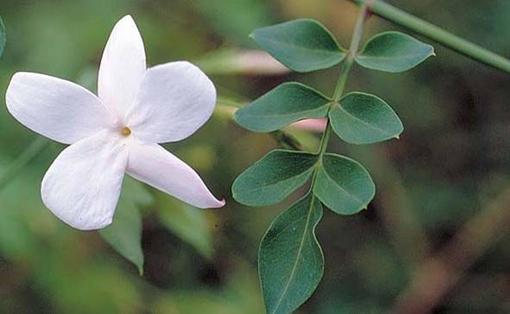
Names in different Indian languages
| English | Spanish Jasmine |
|---|---|
| Hindi | Jaati, cameli |
| Kannada | mallige |
| Malayalam | Pichakam, pichakamulla |
| Sanskrit | Jaati, malati |
| Tamil | Kotimalligai, pichi |
| Telugu | Jaji |
| Unani | Yaasmin |
| Folk |
Synonyms
Jaati, Jaatikaa, Jaatimalli, Pravaaljaati, Saumanasyaayani, Sumanaa, Chetikaa, Hriddgandhaa, Maalati, Chameli
Jasminum grandiflorum Linn.
Classification according to Charaka, Susrutha & Vagbhata
| Charaka | |
|---|---|
| Susrutha | |
| Vagbhata |
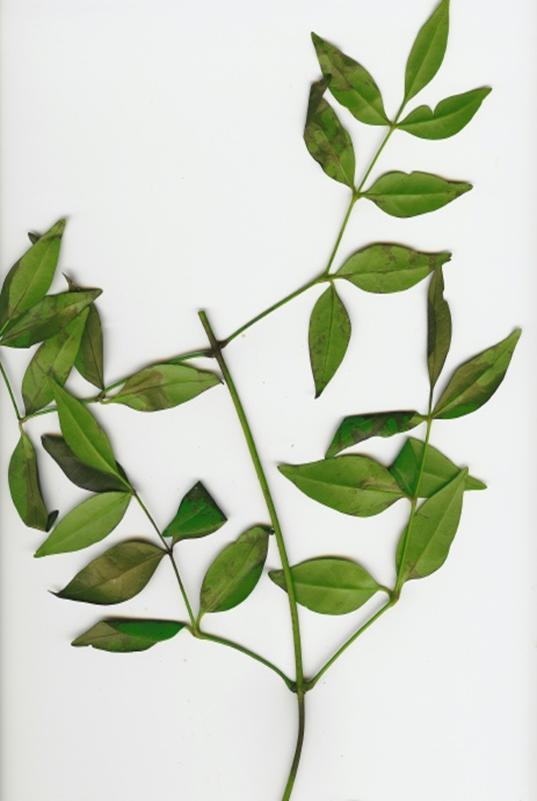
Varieties & adulterants – (CV – controversy, AD – adulterants)
Morphology
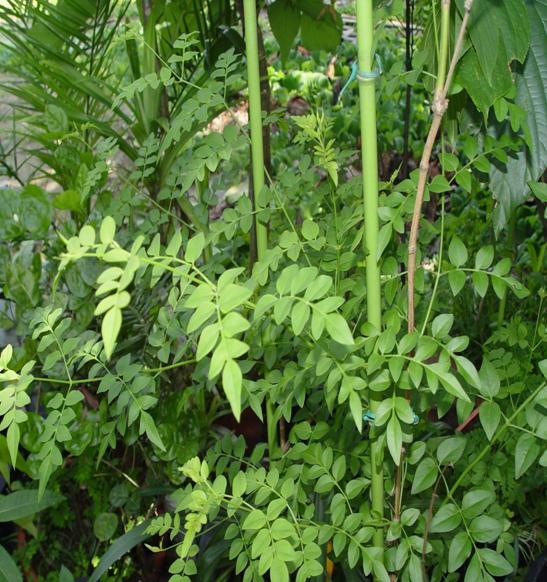
This is a slender creeper, bearing hard and- angular branches.
Leaves – compound with three paired foliate sending with a single leaf at the tip.
Flowers – white, fragrant, with five petals. Flowering occurs in rainy season.
Distribution & Habitat
Throughout India
Chemical constituents:
benzyl acetate, benzyl benzoate , phytol , jasmine , methyl jasmonate , linalool , geranyl linalool, eugenol , isophytyl acetate, isophytol, ascorbic acid, anthranilic acid , glucoside, indole oxygenase, alkaloid jasminine , salicylic acid.
Properties:
Guna : laghu, snigdha. mridu;
Rasa: tikta. kashaya;
Vipaka : katu :
Virya ushna
Karma –
Vranaropana, netra rogaghnam, hridyam, stanya soshanam
calming , sedative, CNS depressant, astringent , mild anaesthetic, diuretic, anthelmintic, emmenagogue
Srotogamitva:
Dosha : Tridoshaghni.
Dhatu : Shukra (aphrodisiac), rakta (bleeding disorders). rasa (menstrual disorders).
Mala : Mutra.
Indication:
Ulcers, wounds, fever, skin disease, cough, piles, leucorrhoea, mouth ulcers, Eczema,
Part used:
Root, leaves, flower
Dosage:
Leaf juice 10-15 ml
Powder 2-4 g
Decoction 50-100 ml
uses:
External uses : The leaves are chewed for oral hygiene. It relieves stomatitis and strengthens teeth and gums Flowers are aphrodisiac. Leaves and roots are used for cleaning and healing wounds
Decoction is used as gargles for stomatitis. Local application of root or oil is useful in paralysis, bellspalsy etc. Roots are applied on the penis in loss of libido. Also useful in itching and skin diseases.
Ear conditions – leaves are boiled in oil which is then used as .ear drops. Eye conditions leaves and flowers are tied on the eyes or their juice is used as eye drops.
In urinary disorders, the flowers or leaves are applied locally on the hypogastric region for relieving cystitis and retention of urine.
Internal uses: Blood diseases, dysuria, amenorrhoea, impotence, skin diseases and poisoning.